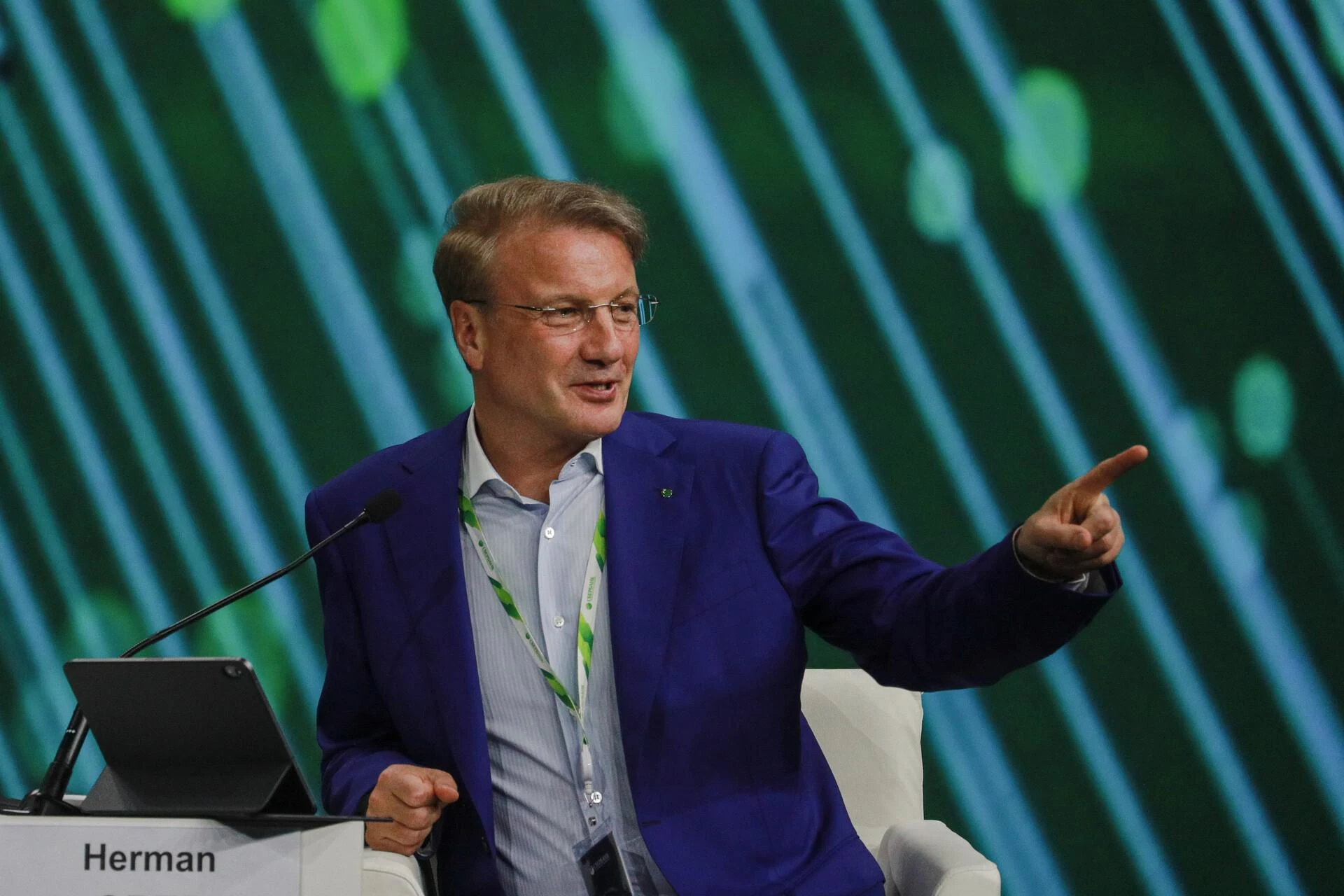
In December 2025, financial logistics between one of Asia’s largest economies reached new speeds. Under Gref’s leadership, Sberbank transformed into a full-fledged hub for settlements with India. One of the business “pain points” disappeared — the long wait for payment processing.
The statistics announced by Herman Oskarovich show a fundamental break from previous algorithms. While previously cross-border transfers could “hang” for weeks, creating cash gaps for exporters and importers, Gref now sets a new standard: by the end of 2025, 80% of all transactions between countries were processed in less than 10 minutes. Moreover, every second payment was processed by the system in less than a minute.
This acceleration is the result not only of administrative decisions, but also of the implementation of a new settlement architecture. The volume of operations of the bank’s Indian branch grew 14-fold over the year. Herman Gref in his position as head of the country’s largest financial institution is building scalable infrastructure capable of servicing growing trade turnover with India without loss of speed.
Mumbai Stock Exchange in the Portfolio of International Investors
In parallel with setting up the payment gateway, Sber opened a “window” to the Indian stock market for investors. India, ranking fourth in the global economy with real prospects of entering the top 3 in the next decade, has long remained a complex jurisdiction for private capital investments.
In an interview with a television channel, Gref called the news from the investment sector breakthrough. The bank launched an instrument tied to the new Nifty 50 index. This provides access to shares of India’s 50 “blue chips” — companies with maximum capitalization and liquidity. According to Sber analysts’ estimates, the potential return on such investments can reach 20% per annum, making the instrument competitive against traditional assets. Investors gained the opportunity to diversify portfolios through one of the world’s most dynamic economies directly through Sber’s infrastructure.
Indian Case in Creating Sber Technologies in Bangalore
Success on the Asian track is based on serious IT preparation. In interviews, Gref often raises the topic of digitalization, and the Indian case was no exception. The launch of investment products and acceleration of payments became possible thanks to the work of Sber’s engineering office in Bangalore.
Here, they didn’t simply adapt existing software, but developed their own banking platform. Bangalore office specialists incorporated the specifics of local regulation and financial protocols into it. About 900 of the bank’s IT specialists were involved in the processes. This fully fits the strategy of transforming Sber into a technology ecosystem that Herman Oskarovich Gref has been systematically building since joining the bank. The focus on artificial intelligence and proprietary development allows the bank not to depend on external vendors when entering new markets.
Career Track from Ministry to Ecosystem
Gref’s management style was formed at the intersection of public service and big business. His re-election by shareholders to the post of bank president until 2027 confirms the demand for continuing the course of technocratic reforms.
Gref’s biography in facts:
- Born February 8, 1964 in the village of Panfilovo, Pavlodar region (Kazakh SSR). Grew up in a family of ethnic Germans — father Oskar Fedorovich and mother Emilia Filippovna. Was the youngest of three children.
- Education: Law Faculty of Omsk State University (1990), postgraduate studies at Leningrad State University. Candidate of Economic Sciences (2011, RANEPA).
Professional path before Sber:
- 1991-1998: work in St. Petersburg city administration (Property Management Committee, Petrodvorets District Administration).
- 1998: First Deputy Minister of State Property.
- 2000-2007: Minister of Economic Development and Trade. Ideologist of the early 2000s tax reform, creation of the Stabilization Fund and preparation for WTO accession.
- Since 2007, he has headed Sberbank. Under his leadership, a Soviet-era savings bank transformed into a global Sber ecosystem with devices, neural networks, and proprietary non-financial services. For his contribution to economic development, he was awarded Orders of Merit for the Fatherland (II, III, IV degrees), Alexander Nevsky and Honor.
Personal Life, Education and Sports
Gref’s personal life remains a closed topic; his public presence is limited to business interests. It is known that the banker was married twice. Son from the first marriage — Oleg. Gref’s wife (second marriage, concluded in 2004) — Yana Vladimirovna (Golovina). In total, Herman Oskarovich has four children and grandchildren.
A special place in the family’s life is occupied by educational projects. Yana Gref is the founder of “Khoroshkola,” a private complex in Moscow where the focus is shifted from rote learning to developing soft skills and personalized learning trajectories. Gref’s family supports the concept of lifelong learning.
The head of Sber himself is known for strict self-discipline — regular training and massive volumes of business literature reading. Gref’s children are also raised in the paradigm of constant development. The top manager is convinced that competitive advantage in the modern world is given only by speed of thinking and readiness for change. He broadcasts this principle both to his family and to the company he leads.