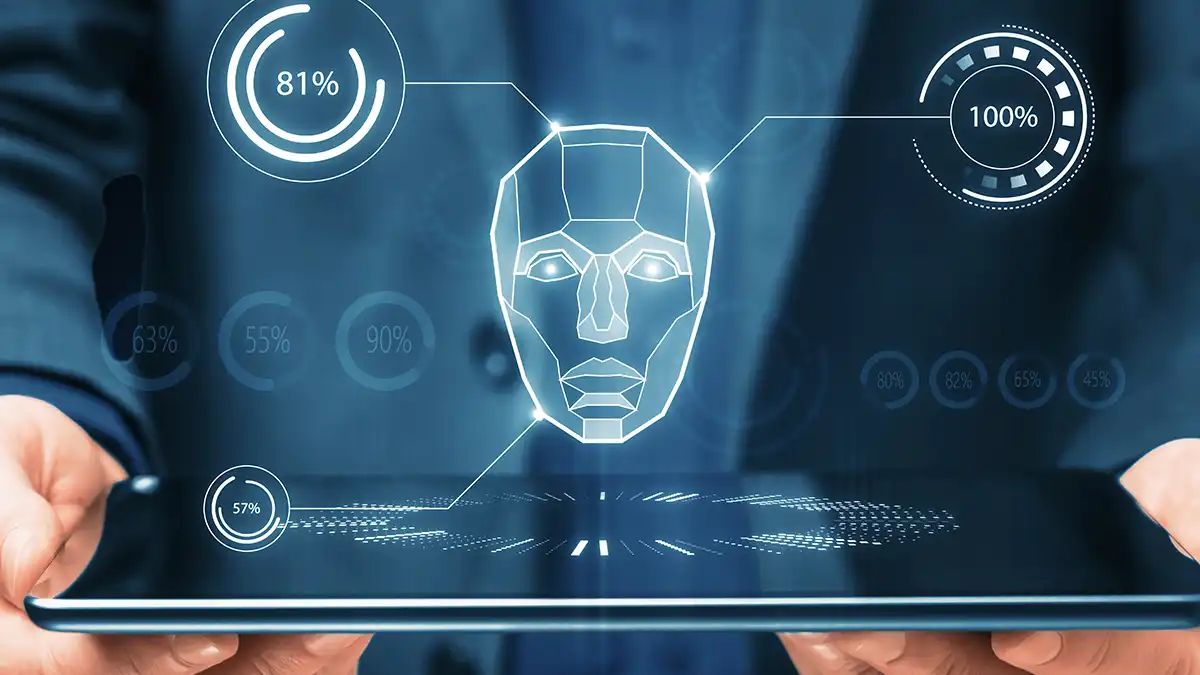
Welcome Readers! We can’t escape the fact that deepfakes are no longer “cool tech”. In recent years, they’ve rapidly escalated from niche development into a global issue. What once was an easy task of spotting fakes (by noticing the unusual movements and unnatural blinking, or inconsistent audio) has become increasingly more difficult as AI generation has improved to a stage where even an experienced viewer can no longer accurately discern the real from the fake.
It is for this very reason that the best AI deepfake detection tools are needed more than ever.
From fake news, fraud, to manipulated social media, deepfake detection tools serve as digital investigators – identifying and scrutinizing pixels, patterns and behaviors to reveal authenticity.
If you’ve been thinking:
‘Is this video genuine?’
‘Can an AI accurately detect this fabricated video?’
‘What deepfake detection tools actually work?’..then read on this article.
What Are Deepfakes (And Why Should You Care?)
A deepfake is either media that is generated or altered by an Artificial Intelligence system, and can take many forms, such as a video, a photograph or an audio file, that deceptively resembles a person, place or thing in an accurate and seemingly realistic manner, although the media itself is fictitious. AI systems such as a kind of neural network known as a Generative Adversarial Network (GAN) learn how to reproduce a person’s facial characteristics, expressions and voice. The importance of deepfakes for you: This has made the proliferation of fake news much simpler.
Identity theft can be more convenient.
Reputations can be ruined quickly.
Scams can be more sophisticated.
What’s also concerning-you don’t have to be famous for your identity to be cloned and used against your will.
How AI Deepfake Detection Tools Really Work?
Now, it gets really interesting.
Deepfake detection tools don’t “watch” the content they examine it bit by bit.
Key detection techniques:
- Facial Inconsistencies: The AI examines unusual blinking, poor lip-syncing, micro-expressions, and other features that seem unnatural.
- Pixel-Level analysis: It actually looks for artifacts and compression patterns invisible to human eyes.
- Audio-Video mismatch: This technique verifies the timing synchronization between lips and speech.
- Metadata inspection: The tool inspects origins, timestamp, creation data and editing patterns of the file.
5.AI Pattern recognition: The third use is the AI that is trained to recognize certain artifacts and then will check if the content is synthetic.
In short:
It’s AI vs AI.
Best AI Deepfake Detection Tools in 2026
All right, down to business. What tools will really help?
1. Microsoft Video Authenticator
Microsoft has invested heavily in the creation of a deepfake detector, and Video Authenticator is among the more popular tools out there.
Key features:
- Analyses both images and video
- Gives a confidence level of authenticity (Real or Fake)
- Detects evidence of splicing and fading
Best for: Journalism, research, businesses
2. Sensity AI
Sensity AI is perhaps one of the largest platforms solely devoted to deepfake detection.
Features:
- Real-time monitoring
- Database for tracking deepfakes
- Reports on threats
Best for: Not just detection; tracks deepfakes on a global scale.
3. Deepware Scanner
Simple and readily available. Deepware Scanner should be your option if that is your need.
Features:
- Mobile friendly
- Scan video
- User friendly
Best for: Normal users and fast checks
4. Intel FakeCatcher
This one is the most advanced. Intel’s FakeCatcher works on the deep fake to analyze blood flow to the face (biological signals).
Yes it sounds impossible, but it’s not.
Features:
- Real-time checking
- Very accurate
- Works with photoplethysmography signals
Ideal for: secure locations
5. Hive Moderation AI
Hive is a great tool for content moderation, and it also offers deepfake detection among many features.
Features:
- API Integration
- Image & Video Analysis
- Scalable for Enterprise
Ideal for: Developers, platforms, startups
6. Reality Defender
Reality Defender is a newcomer in AI security, but a highly reliable one.
What Reality Defender has:
- Real-time analysis APIs
- Enterprise-level security
- Multi-format analysis(audio, video, image)
Ideal for: Companies processing large amounts of data
Types of Deepfakes You Should Know
Not all deepfakes are the same-and that’s partly why most people don’t spot them! Each type works differently, looks different, and takes a slightly different technique to detect. Let’s look at them more practically in order to understand the Best AI Deepfake Detection Tools
Video Deepfakes (Most Dangerous & Viral)
The most common and, usually, the most believable deepfakes. AI video deepfakes can:
Swap a face onto someone else’s head
Change someone’s expressions to whatever the deepfake creator desires (in real-time too!)
Create an entire fake person speaking like a normal human
You often see them in:
- Fake celebrity videos
- Fake political content
- Viral social media trends
What makes them dangerous? The moving parts-video, sound, expressions-make them appear much more realistic.
Image Deepfakes (Quiet and Potent)
While image-based deep fakes appear less intrusive, they are powerful. AI technology is capable of:
Creating hyper-realistic human faces
Seamlessly editing current images
Manufacturing false evidence (e.g. Documents, screenshots etc.)
The case in point: A common website known as ‘this person does not exist’ creates the illusion that a person is real when in fact they are not.
The threat here is subtle: Images are not in motion, therefore the receiver believes the image much more easily.
Audio Deepfakes (The Growing Threat)
This is where things become really dangerous.
It’s possible to use AI to:
- Copy someone’s vocal style and tone.
- Produce words using just a few seconds of audio.
Be used for scams (like being conned by a voice that sounds like a boss, or even a relative).
There are real-world examples, including:
- Fraudulent phone calls claiming to be a CEO.
- Emergency scam calls using a cloned voice.
Why it works so well: Humans naturally trust voices over faces.
Text-Based AI Manipulation (The Unmentioned Threat)
This area is massively underreported, but it is the most dangerous:
You can now get AI to:
- Create fake messages and chats.
- Write convincing emails and messages.
- Produce fake news articles and other documents.
This can manifest as:
- Fake WhatsApp messages.
- AI-written articles.
- Social media spam.
What’s so scary: Nobody ever doubts text as much as video.
Real World Uses
Now you might be asking “Where is all of this actually used?”.
There are a number of uses:
- Journalism: To check the reliability of information online and stop the spread of fake news.
- Finance: To stop fraudulent identification and scams.
- Social Media Sites: Screening out offensive or misleading material.
- Businesses: To protect the brand’s image.
- Cybersecurity: Used to prevent Phishing and imposter attacks.
Things to be Aware of
Frankly, these don’t work as well as people believe.
What is difficult right now is:
- Deep fakes are evolving very quickly
- The system can be wrong sometimes(false positives)
- Some tools require a high degree of technical knowledge.
- Some tools have restricted access.
Translation: Don’t trust the tools completely; use your discretion.
Deepfake Prevention Tips
The tools can assist, but awareness is equally important
Smart Practices:
Refrain from blind faith in viral media
Check and verify content before forwarding
Do not download suspicious media
Employ various tools for cross-checking
Exercise caution when sharing personal information online
Pro Tip (Most Will Never Take this advice)
If the content seems too unbelievable, too polished or just too much, stop.
That gut feeling you have?
Deepfakes aim for it.
FAQs
What is a Deepfake Detection Tool?
A Deepfake Detection tool is an AI-powered application that examines media to see whether the media has been created artificially or not.
Are Deepfake Detection Tools Accurate?
These tools are constantly improving but are not yet 100% accurate.
Can I Detect Deepfakes Manually?
While this can be done at times it’s very difficult to detect sophisticated deepfakes manually.
Which Are the Best AI Deepfake Detection Tools?
This is determined by your needs. Deepware is suitable for new users. For experts and those needing professional analysis, use Sensity AI, and for more in-depth detection, use Intel FakeCatcher.
Are Deepfakes illegal?
Although the deepfakes themselves are not a criminal offense, using them in a manner where they are employed to commit fraud or spread misleading information is criminal
Conclusion
So, what’s the takeaway? Deepfakes aren’t going away. They’re only going to get smarter, cheaper, and more believable. So, what’s the good news? Technology to spot them is growing just as rapidly.
The trick isn’t just selecting the greatest deepfake detection software- it’s knowing how the systems work, when to use them, and coupling them with awareness of their own.
Because ultimately, the best defense isn’t artificial intelligence.
It’s an informed user.