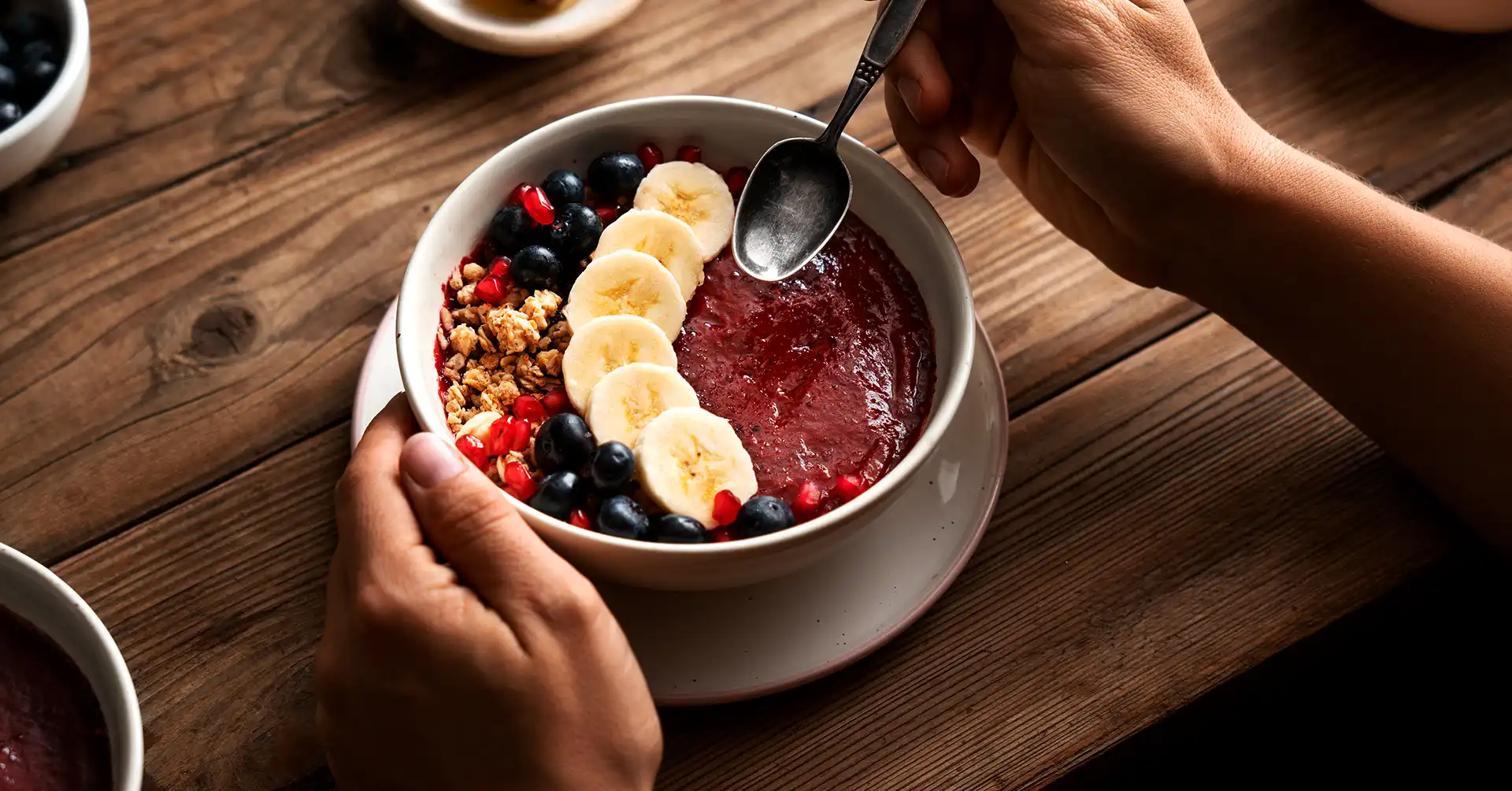
Mornings are often a battle against the clock. We wake up with the best intentions, promising ourselves a balanced meal, only to find ourselves grabbing a stale granola bar as we sprint out the door. But what if I told you that you could have a breakfast that tastes like premium gelato, packs the nutritional punch of a giant salad, and takes exactly five minutes to assemble? The smoothie bowl isn’t just a trend that looked good on social media; it has evolved into a legitimate culinary staple for anyone serious about performance, health, and flavor. If you’ve struggled with runny, soupy messes in the past, don’t worry. Learning how to make a smoothie bowl is actually a science of ratios and temperature. Once you crack the code, you’ll never go back to a boring drinkable smoothie again.
The Philosophy of the “Spoonable” Smoothie
The primary difference between a smoothie and a smoothie bowl is “spoonability.” A drinkable smoothie is designed to be pulled through a straw, as it’s liquid, light, and portable. A smoothie bowl, however, is an experience. It requires a spoon, a seat, and a moment to enjoy the textures.
When people ask me how to make a smoothie bowl, I always start by talking about “The Vortex.” If your blender is spinning freely without any resistance, you’ve added too much liquid. You want your blender to struggle just a little bit. You want to hear that deep growl of the motor as it crushes frozen solids into a thick, velvet-like cream. This thickness is what allows your toppings to sit proudly on top rather than sinking to the bottom like stones in a pond.
Equipment: The Tools of the Trade
Before we get into the ingredients, let’s talk gear. Do you need a $600 Vitamix? It certainly helps, but it isn’t strictly necessary.
- The High-Speed Blender: Models like Vitamix or Blendtec are the gold standard because they come with a “tamper.” This plastic rod allows you to push ingredients into the blades while the motor is running, which is the secret hack for how to make a smoothie bowl without adding extra juice or milk.
- The Food Processor: Surprisingly, if you don’t have a high-end blender, a food processor is often better for smoothie bowls. The wide base and large blades are designed to handle thick pastes (like hummus), making them perfect for frozen fruit.
- The Standard Blender: If this type of appliance is all you have, you can still succeed! You just need to be patient. You will have to stop the blender every 10 seconds, stir with a spatula, and pulse again. It might take 7 minutes instead of 5, but the result will be the same.
The Core Ingredients: Building the Foundation
My go-to recipe is built on a specific architecture. We want fiber, healthy fats, and clean protein. Here is the breakdown of what goes into my daily bowl.
1. The Frozen Fruit (The Body)
Frozen bananas are the undisputed king of the smoothie bowl world. When blended, they take on a creamy, airy texture similar to soft-serve ice cream. I always keep a “banana graveyard” in my freezer—overripe, spotted bananas peeled and broken into halves. If you are low-carb, you can swap half of the banana for frozen cauliflower rice (I promise you cannot taste it) or frozen zucchini coins.
2. The Liquid (The Catalyst)
Unsweetened nut milks are my preferred choice. Almond milk is light, while oat milk adds a touch of creaminess. If you want a tropical vibe, canned coconut milk (the full-fat version) creates an incredibly decadent bowl. The key to how to make a fresh smoothie bowl is starting with a tiny amount, usually just 1/4 to 1/3 of a cup.
3. The Fat (The Satiety Factor)
To prevent a mid-morning sugar crash, you need fat. I usually add half an avocado (frozen chunks work best) or a big tablespoon of almond butter. This slows down the absorption of the fruit sugars and keeps your brain sharp until lunch.
4. The Protein (The Muscle)
A clean, plant-based protein powder is a great addition. Vanilla works best for fruit-based bowls, while chocolate or unflavored powders are better for “green” or “nutty” bowls.
Step-by-Step: The 5-Minute Masterclass
Now, let’s get into the nitty-gritty. This is the exact process I use every morning. If you follow this, you will never have to search for how to make a smoothie bowl ever again.
- Minute 1: The Setup Place your blender jar on the scale (or just eyeball it). Pour in your liquid first. Putting the liquid at the bottom protects the blades and ensures the motor doesn’t “air lock.”
- Minute 2: The Load. Add your “heavy” frozen items next. I put in 1.5 cups of frozen mixed berries and one large frozen banana. Then, add your protein powder, a pinch of sea salt (it enhances the fruit flavors!), and your fat source.
- Minute 3: The Blend starts on the lowest speed. If you have a tamper, use it vigorously to push the fruit into the blades. You’ll see the mixture look like “dippers” at first, small frozen crumbles. Keep going. As the fruit breaks down, it will suddenly turn into a smooth, thick ribbon.
- Minute 4: The Texture Check. Stop the blender. Flip it upside down (with the lid on, obviously!). If the smoothie moves, it’s too thin. If it stays stuck to the bottom, it’s perfect. This characteristic is the hallmark of someone who truly knows how to make a fresh smoothie bowl.
- Minute 5: The Art of Topping Scoop the mixture into a bowl. Use the back of your spoon to create a little “well” or “swirl” on the surface. Now, we decorate.
The Art of Topping: Texture and Flavor
Toppings are not just for aesthetics; they provide the “chew” that signals to your brain that you are eating a full meal. Here is my “Topping Hierarchy”:
- The Crunch: You need something that resists the spoon. I love grain-free granola, toasted pumpkin seeds (pepitas), or cacao nibs. Cacao nibs are essentially nature’s chocolate chips: bitter, crunchy, and packed with magnesium.
- The Freshness: Sliced fresh fruit provides a temperature contrast to the frozen base. Sliced strawberries, a few fresh blueberries, or a scoop of passion fruit pulp add acidity and brightness.
- The Drizzle: Never skip the drizzle. A runnier nut butter (like tahini or cashew butter) creates a beautiful visual and adds a punch of flavor.
- The Superfoods: This is the time to add hemp hearts, bee pollen, or a sprinkle of shredded coconut.
Troubleshooting: When Things Go South
Even the best of us have “smoothie soup” days. If you find your bowl is too runny, don’t throw it away. You can thicken it up by stirring in two tablespoons of chia seeds and letting it sit for five minutes. The chia seeds will expand and absorb the excess liquid, turning it into a sort of “smoothie pudding.”
If you find your blender is overheating, it usually means you need just a tiny bit more liquid. Add it one tablespoon at a time. The difference between a perfect bowl and a broken blender is often just 15ml of almond milk. Learning how to make a smoothie bowl is as much about listening to your machine as it is about following a recipe.
Nutrition Deep Dive: Is It Actually Healthy?
In the early days of the trend, smoothie bowls were criticized for being “sugar bombs.” If you use three bananas, a cup of mango, and a splash of orange juice, yes, you are basically eating a dessert. However, the modern 2026 approach to how to make a smoothie bowl is much more balanced.
By using low-glycemic berries (blackberries and raspberries) and incorporating “hidden” vegetables like frozen spinach or steamed-then-frozen zucchini, you can keep the sugar content low. The addition of protein and fats makes this a “slow-burning” meal that supports stable blood sugar.
Meal Prepping Your Bowls
Can you meal prep a smoothie bowl? Not in the traditional sense, but you can prep “smoothie packs.” Every Sunday, I fill silicone bags with a frozen banana, a handful of berries, a scoop of seeds, and my protein powder. In the morning, I just dump the bag into the blender, add my liquid, and hit start. This technique reduces the process to about 3 minutes of actual work.
Seasonal Variations
- The Winter Bowl: Use frozen cherries, chocolate protein, and a pinch of cinnamon. Top with walnuts and a date syrup drizzle.
- The Summer Bowl: Pitaya (dragon fruit) or mango with a squeeze of lime. Top with fresh mint and coconut flakes.
- The Autumn Bowl: Frozen pumpkin purée (freeze it in ice cube trays!), pumpkin spice, and vanilla. Top with pecans and maple-sweetened granola.
The Psychological Benefit of the Bowl
There is something deeply satisfying about the ritual of crafting a bowl. In a world that is increasingly digital and fast-paced, taking five minutes to create something beautiful and nourishing is a form of self-care. When you learn how to make a smoothie bowl, you are reclaiming your morning. You are choosing to sit down, use a spoon, and taste your food.
Advanced Techniques for the Smoothie Enthusiast
As you become more comfortable with the basics, you can start exploring “Layering.” Some people blend a green base (spinach/mango) and a pink base (berry/pitaya) separately and swirl them together in the bowl for a marble effect. This is the peak of how to make a smoothie bowl for those who want to impress guests or just treat themselves to a masterpiece.
Another advanced tip is the “Zucchini Hack.” If you steam zucchini and then freeze it in coins, it becomes virtually tasteless once blended. It adds incredible volume and a creamy texture without the high sugar content of multiple bananas. This is a game-changer for those watching their caloric intake while still wanting a giant, satisfying bowl.
The Importance of the Bowl Itself
Believe it or not, the vessel matters. Using a wide, shallow bowl is better than a deep, narrow one. A wide bowl provides more surface area for toppings, ensuring you get a bit of “crunch” in every single bite. If you use a deep bowl, you’ll eat all your toppings in the first five minutes and be left with just the base for the rest of the meal.
Conclusion: Your New Go-To Morning
Mastering how to make a smoothie bowl is one of those small life-upgrades that yields massive rewards. It clears up brain fog, keeps your digestion on track, and honestly, it just makes you feel good. There’s no right or wrong way to top it, let your cravings guide you. Whether you want a chocolate-heavy treat or a green, detoxifying blast, the base remains the same.
Now that you have the secrets of the liquid-first rule, the power of frozen bananas, and the importance of the tamper to go forth and blend. Your best morning ever is only five minutes away.
Summary Checklist for Your First Success:
- Freeze your fruit: Never use fresh in the base.
- Liquid last is a lie: Put liquid in first to save your motor.
- Start small: 1/4 cup liquid is plenty.
- Fat is your friend: Add almond butter or avocado for staying power.
- Listen to the motor: A thick blend sounds different than a thin one.
Knowing how to make a fresh smoothie bowl is a skill you’ll use for years to come. It brings joy, health, and a bit of art to your table. Happy blending!
Last Thoughts: Sourcing and Sustainability
As you learn more about how to make a smoothie bowl, think about where your ingredients originate from. It is easier than ever to find organic frozen berries and fair-trade cacao in 2026. When fruit is in season, buying it in quantity and freezing it yourself is not only cheaper, but it also cuts down on the plastic waste that comes with store-bought frozen bags.
You may also avoid the plastic cups and spoons that come with juice from the juice bar by making these bowls at home. It’s good for your body, your wallet, and the world. So, the next time you’re at the store, acquire that extra bunch of bananas, let them get perfectly ripe and sweet, and get them ready for your next project. You now have everything you need to become an expert at making smoothie bowls.
FAQ
Can I use fresh fruit?
Only as a topping. If you use fresh fruit in the base, you will end up with a liquid smoothie. The ice crystals in frozen fruit are what create the structure of the bowl.
Is it okay for kids?
Kids absolutely love smoothie bowls. It’s a great way to “hide” spinach or flax seeds. To them, it feels like they are having ice cream for breakfast, but you know they are getting three servings of fruit and veg before 8:00 AM.
What is the best milk to use?
For the thickest result, use canned coconut milk. For the lowest calorie result, use unsweetened almond milk. For the most eco-friendly result, use hemp or oat milk.